Exploring Outer Space: Inside the Free-Roam VR Theatre Pilot at TELUS World of Science
Over eight days in Edmonton, 603 guests walked through Step Into Webb inside a deliberately throttled 244 sq. ft. arena. The pilot returned 73.5% utilisation, a 4.84/5 guest rating, and a Net Promoter Score of 84.3.
TELUS World of Science, Edmonton
Edmonton, Alberta
August 2, 2026
8 min read
603
Guests in 8 days
73.5%
Slot utilisation
4.84/5
Average guest rating
84.3
Net Promoter Score
Key Takeaways
Demand held all week. 73.5% of bookable slots were actually used across eight days with only light social marketing. 80.4% once the slow 9–10 AM hour is excluded.
Guests loved it. 4.84/5 average across two independent survey channels, and a Net Promoter Score of 84.3.
They wanted more. 61% of on-site respondents gave an email address to be notified about the next VR event.
This was the floor, not the ceiling. The arena ran at an intentionally limited 16 guests/hour in 244 sq. ft. The latest AP platform is built for 32–128 guests/hour.
It fits science centre operations. One staff member can run the theatre for every 32 guests per hour.
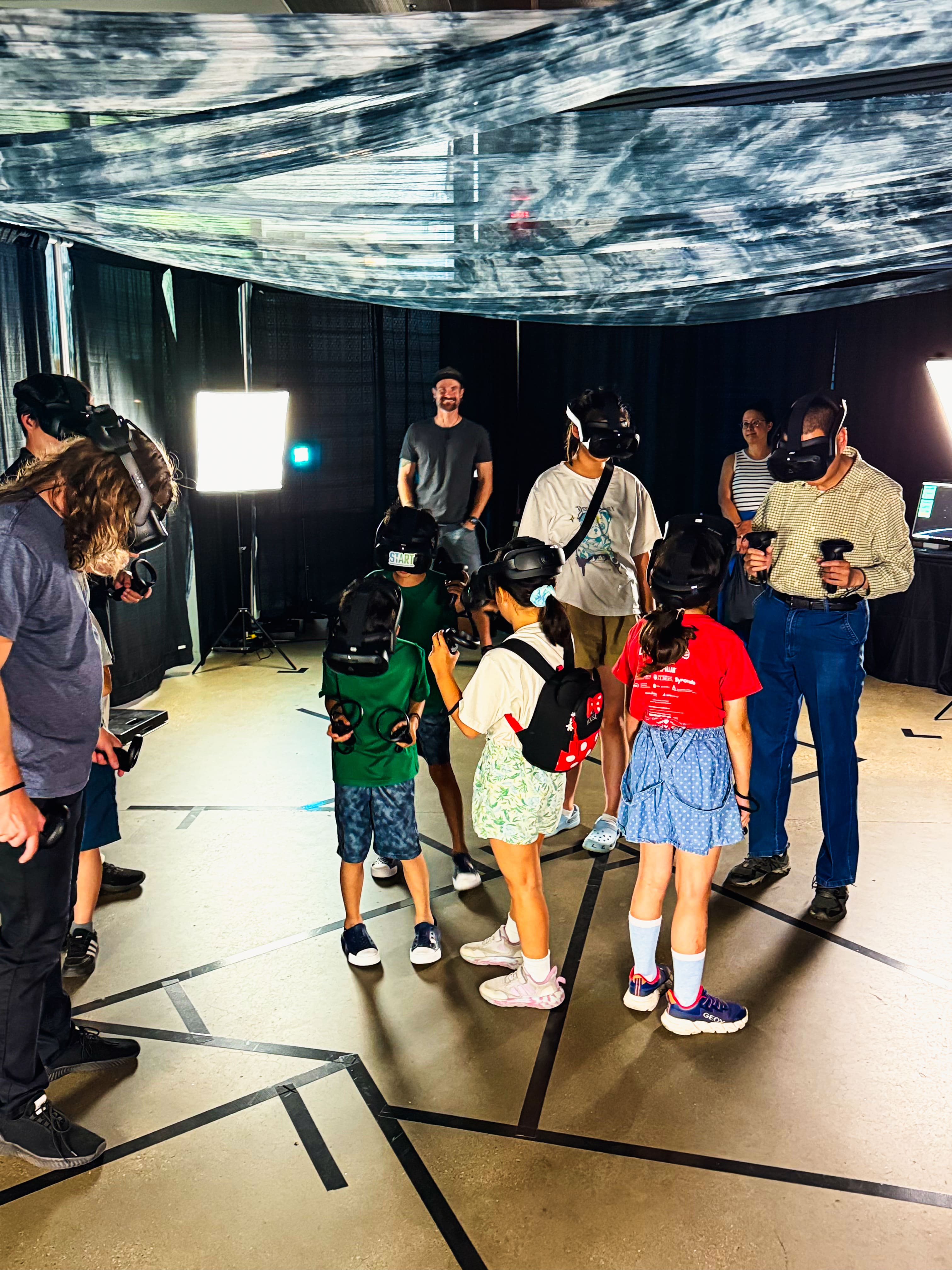
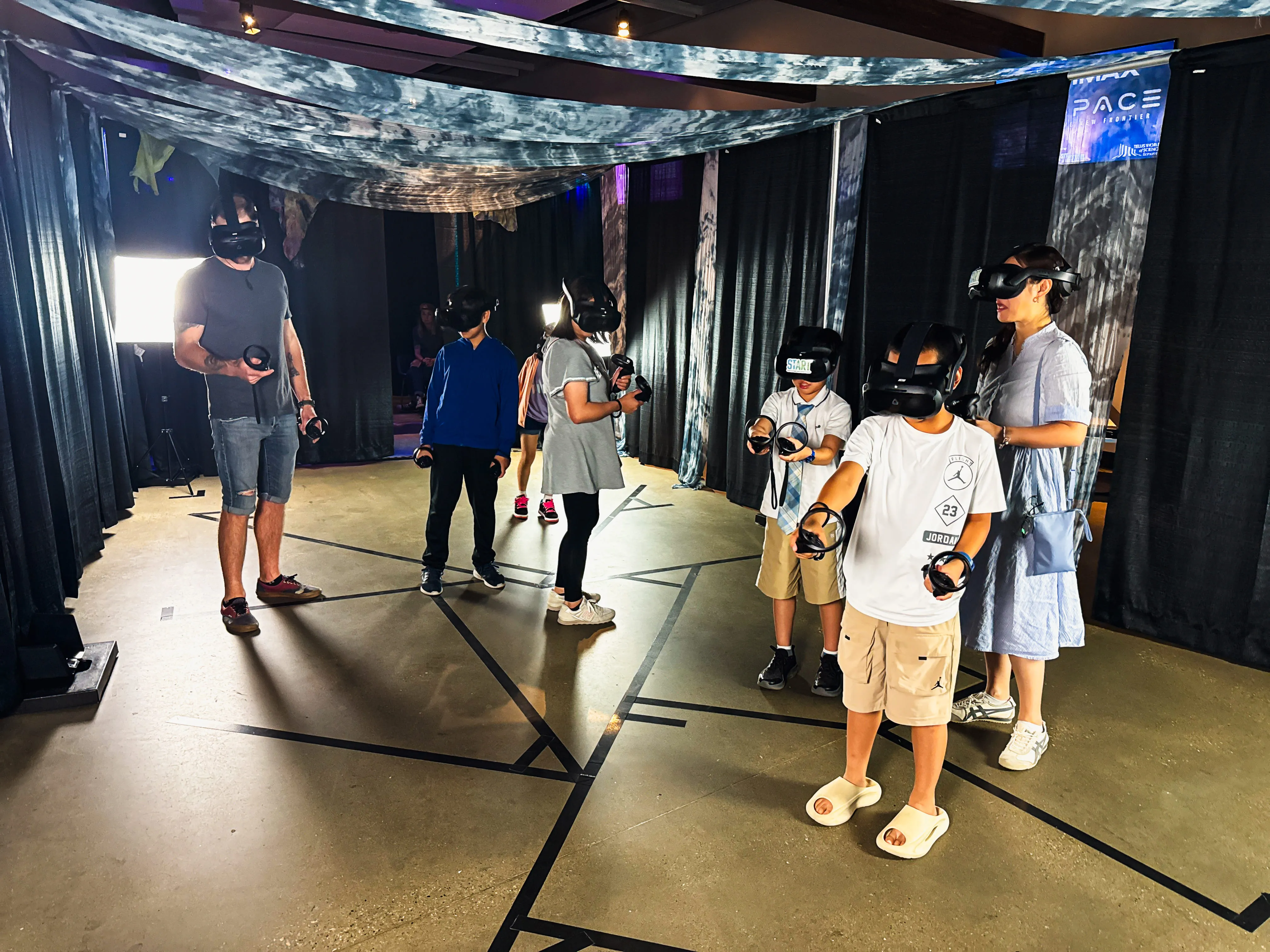
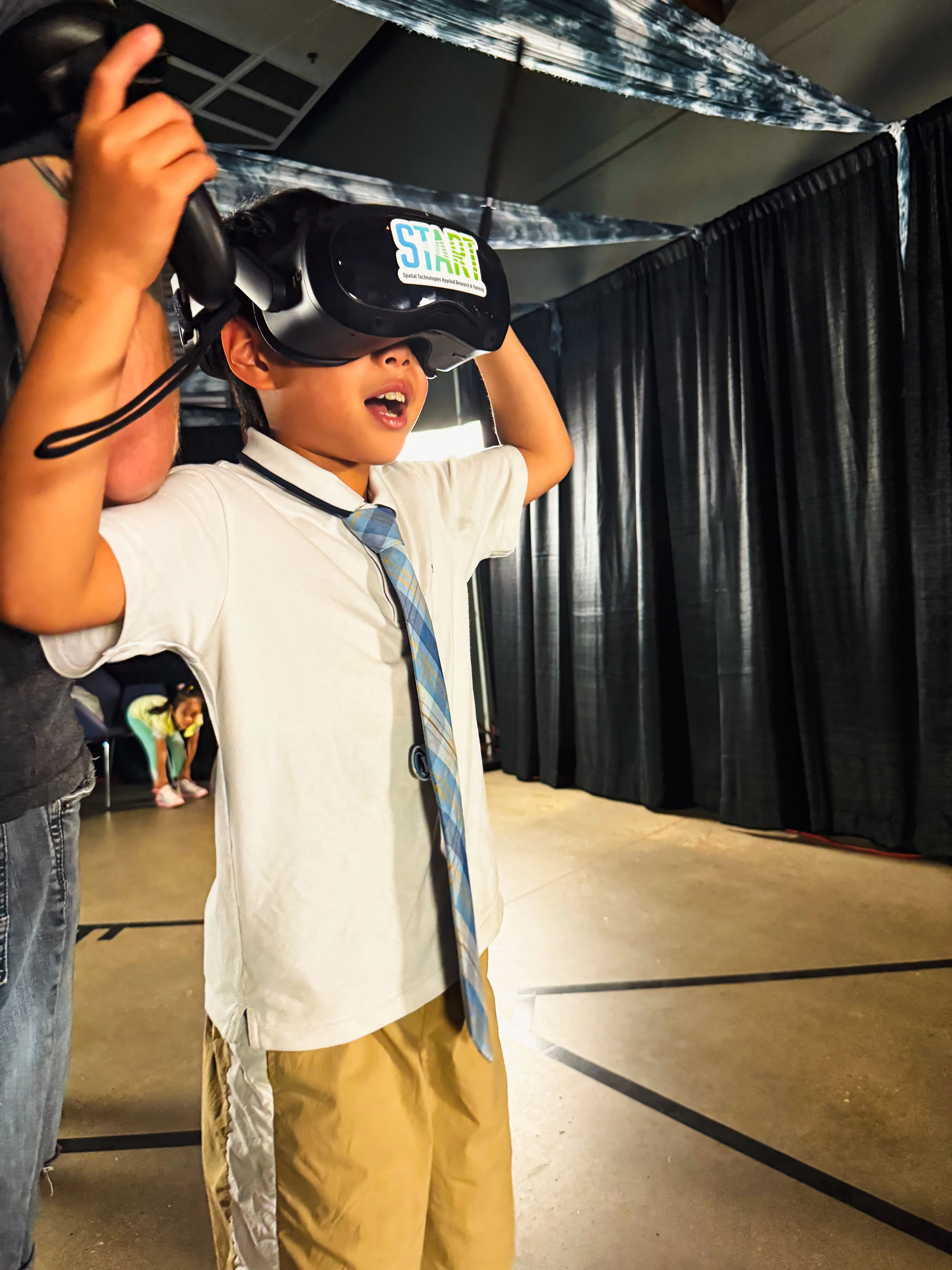
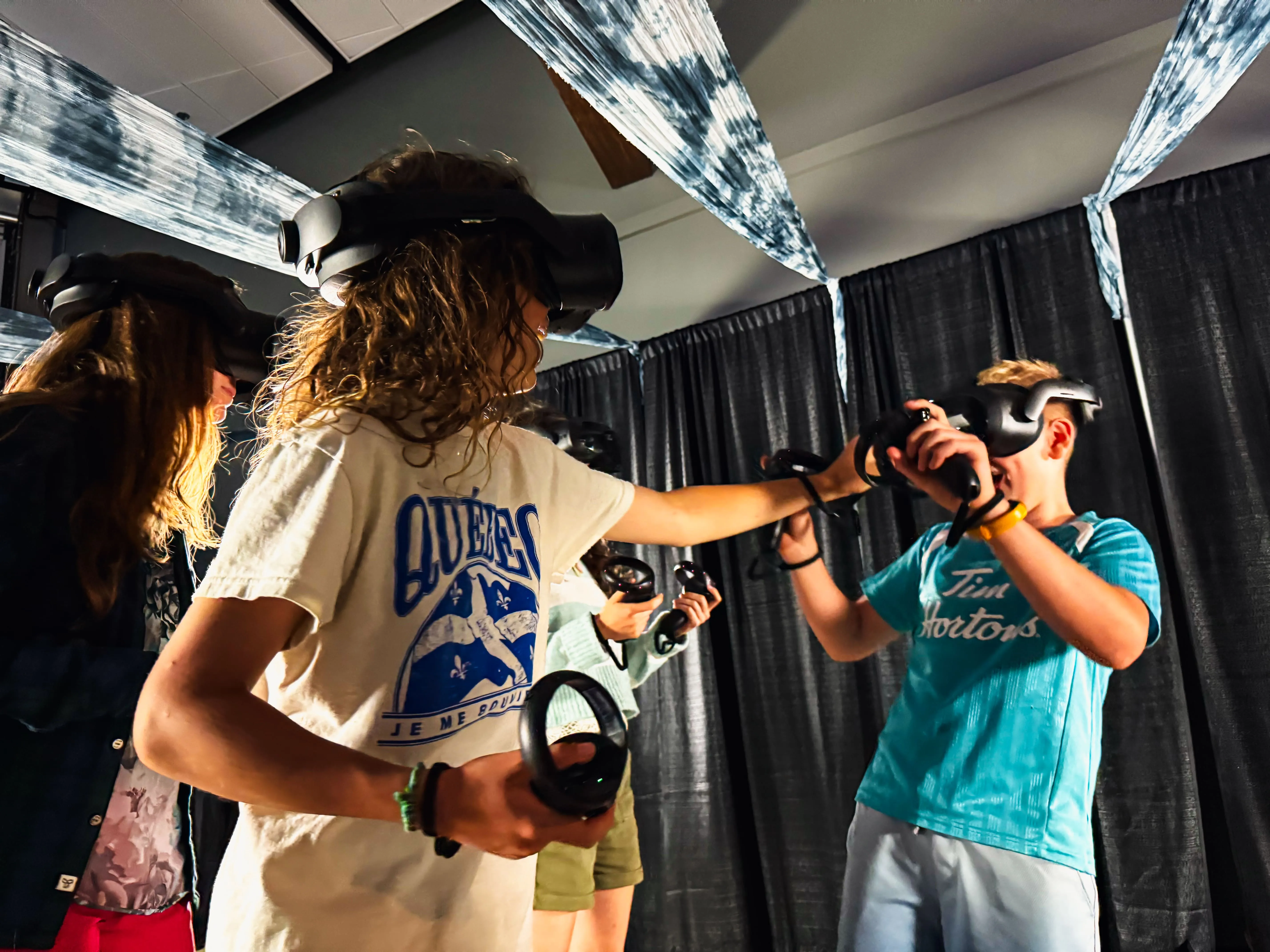
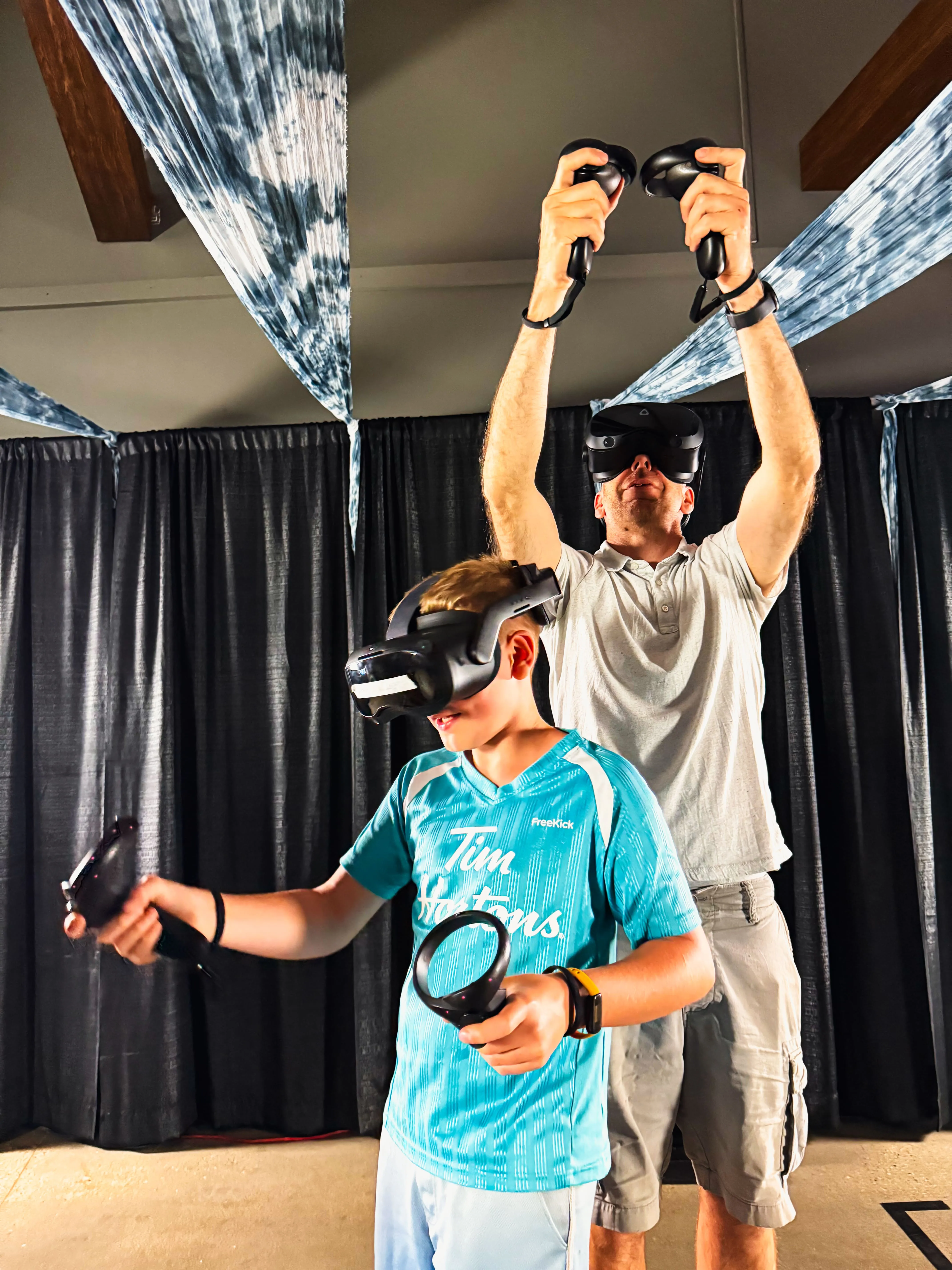
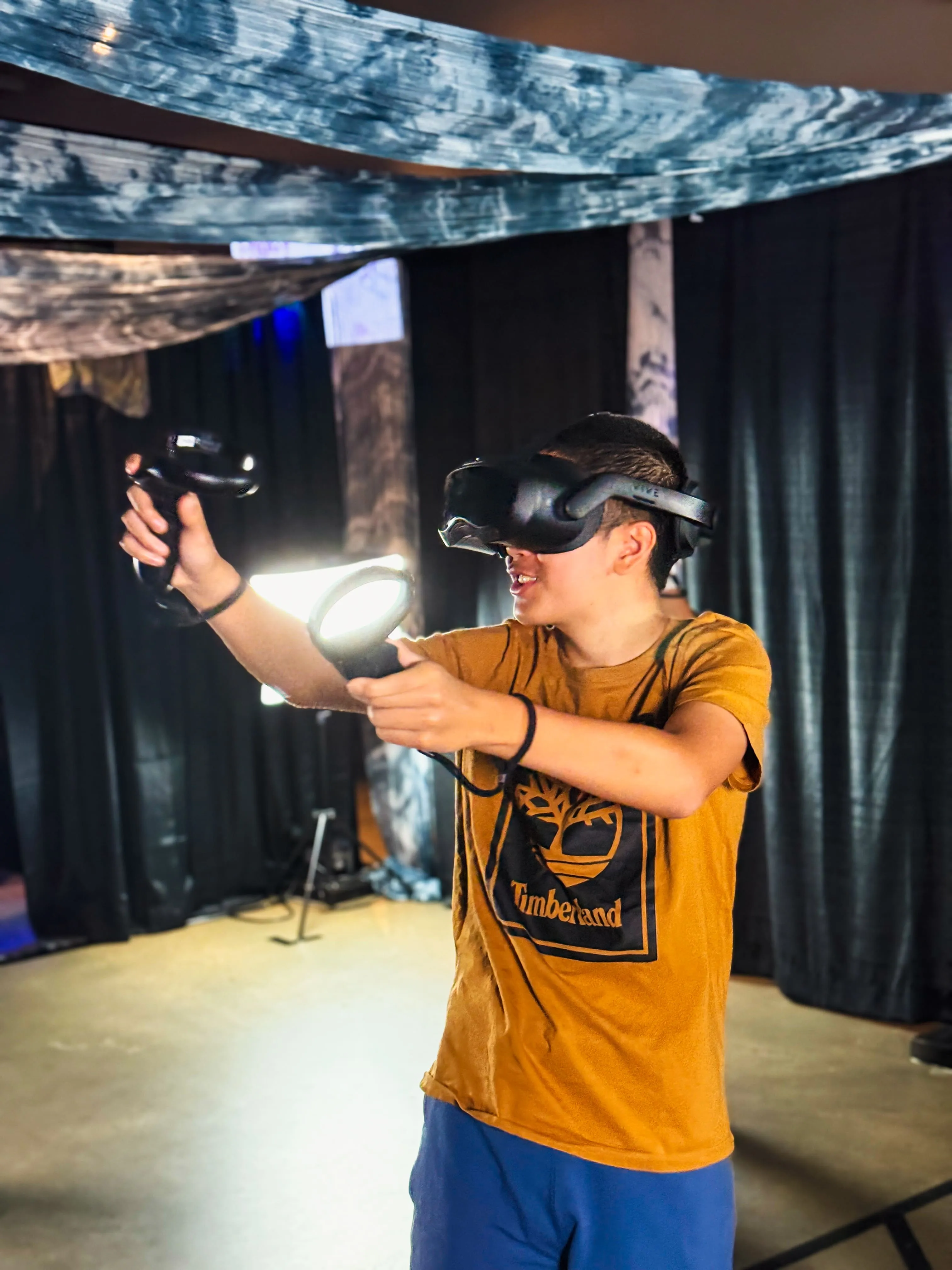
Between August 25 and September 1, 2025, Adventure Portal ran an eight-day Free-Roam VR Theatre pilot at TELUS World of Science in Edmonton, Alberta. The exhibit was Step Into Webb, a 15-minute walking tour of the James Webb Space Telescope with interactive 3D scenes built from NASA’s JWST dataset, timed to complement the centre’s feature exhibit on the telescope.
We built it to answer three questions, and we deliberately made it harder than it needed to be.
Why science centres have been stuck with VR
For nearly a decade, science centres and museums have experimented with virtual reality, and for nearly a decade it has stayed a novelty rather than a mainline attraction. Four problems keep recurring:
Complexity. VR is often difficult to operate and demands highly trained staff.
Low throughput. Most setups handle a handful of guests per hour. Hard to justify against the floor space a major exhibit consumes.
Isolation. Traditional VR is a solo experience, which limits both social interaction and throughput.
Lack of content. High-quality, exhibit-aligned educational VR is still scarce.
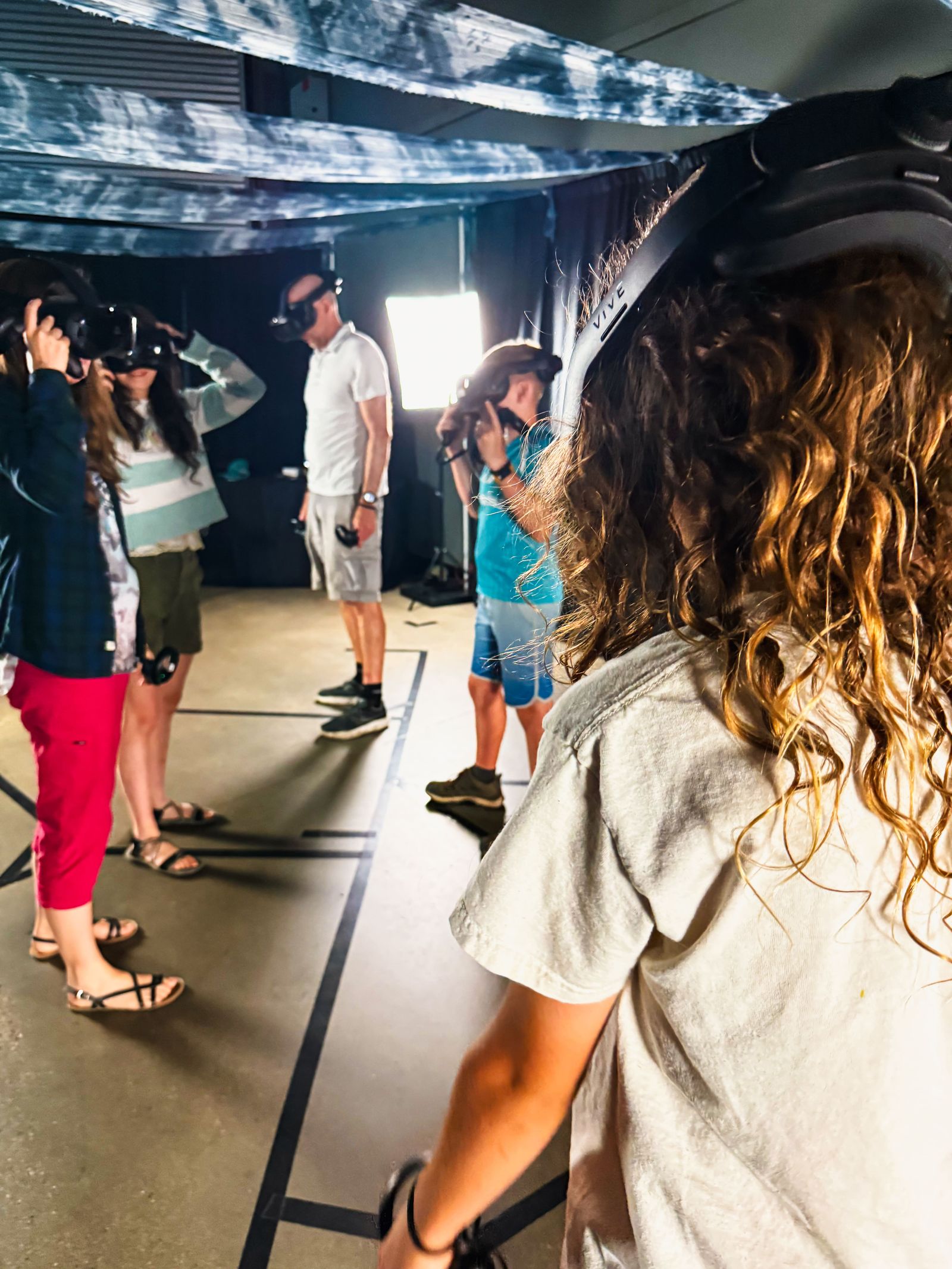
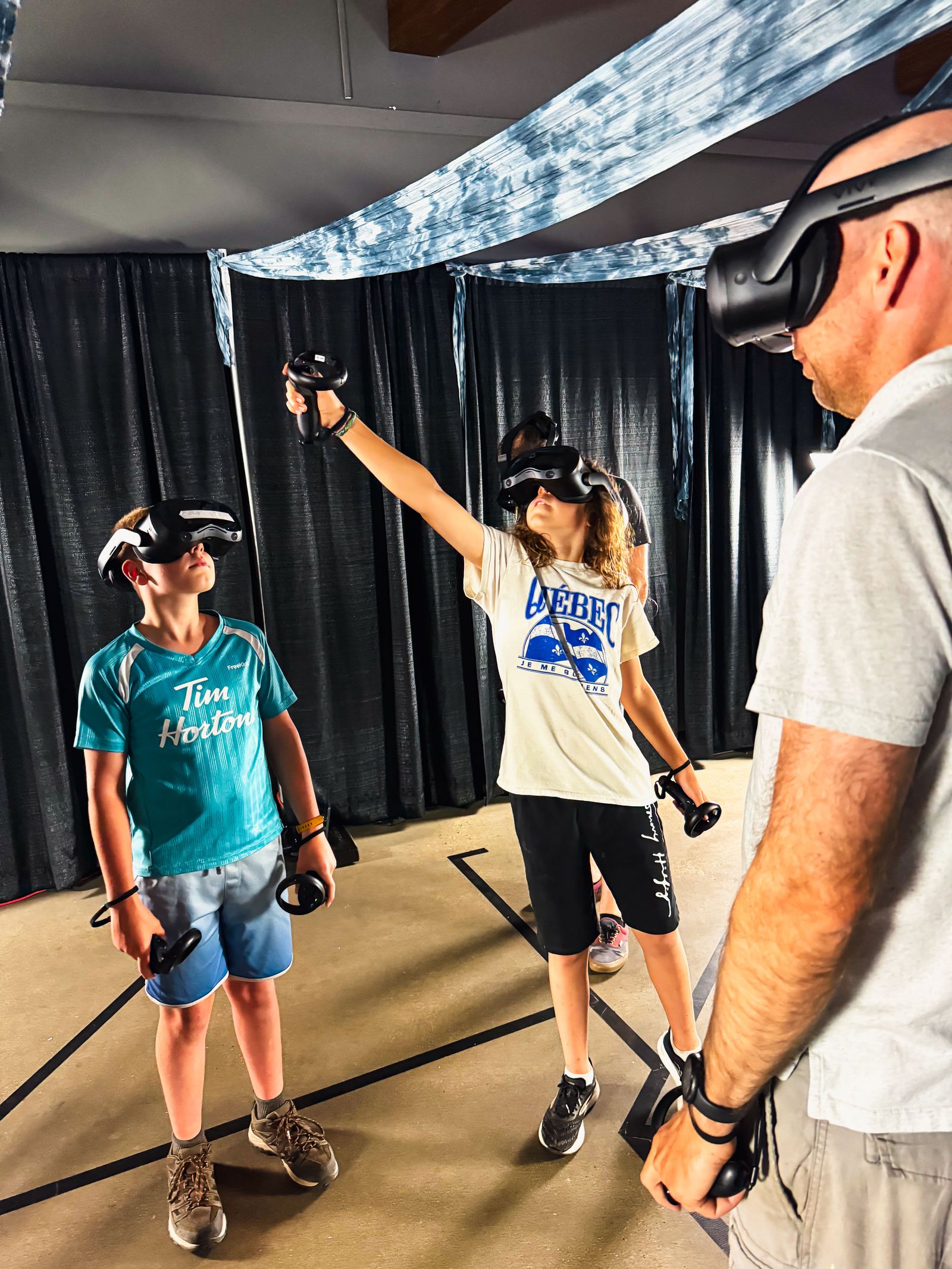
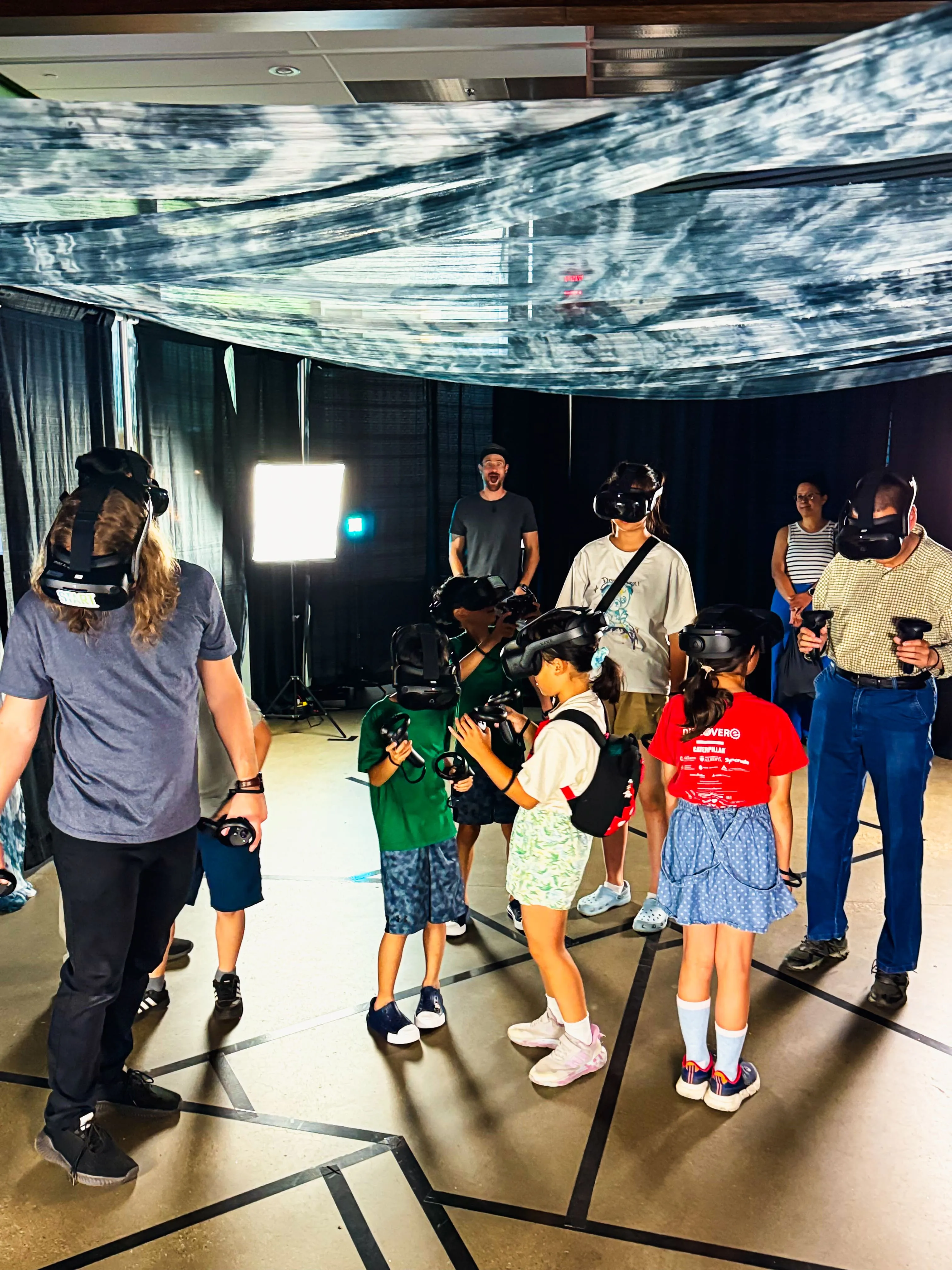
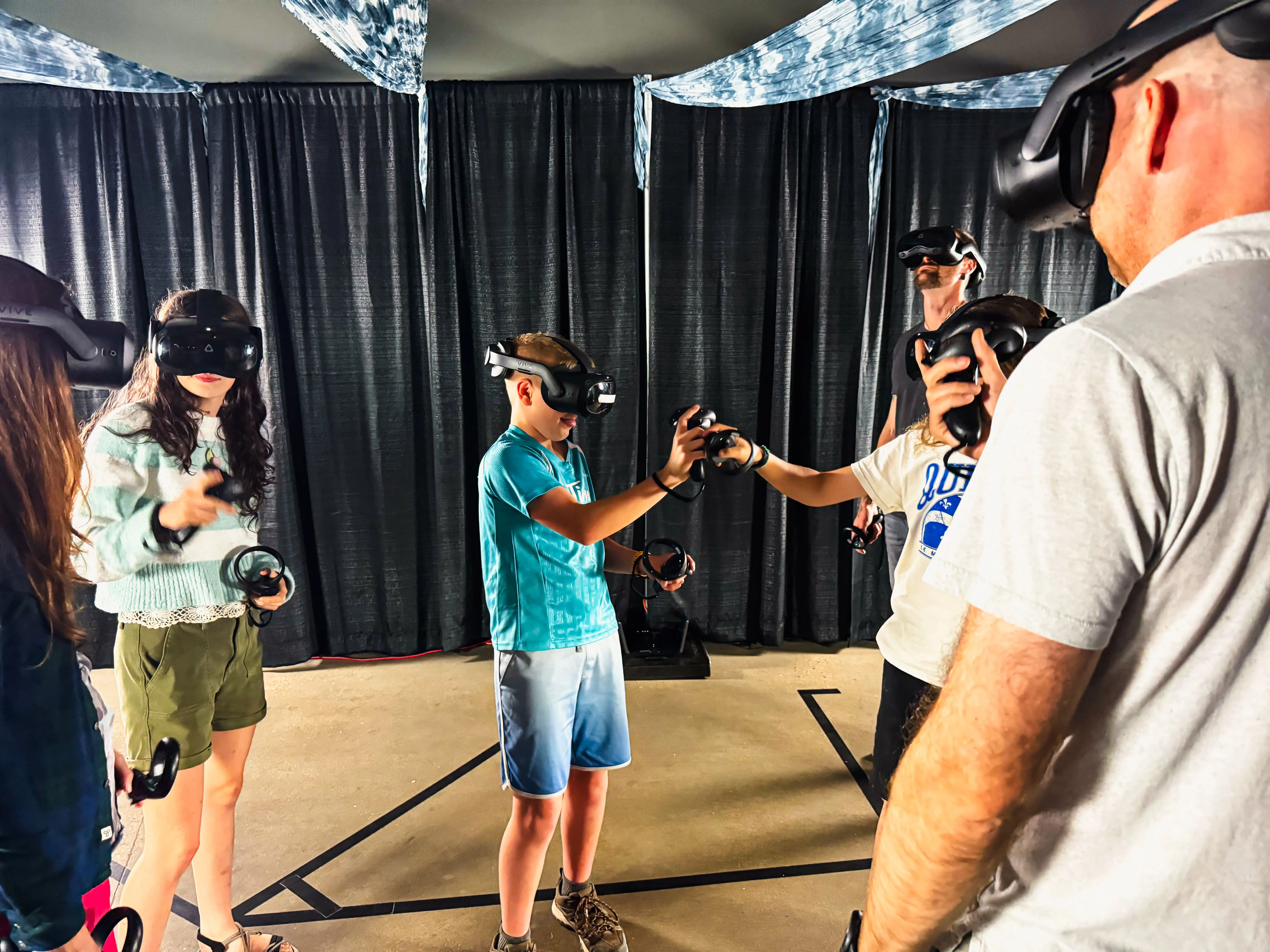
Our hypothesis was that a Free-Roam VR Theatre solves all four at once: up to 32 guests walking together through the same virtual environment, in a semi-permanent installation that drops into existing exhibit space, with rotating content and low enough operational complexity that a single staff member can run it.
The pilot was designed to test that hypothesis under real museum operating conditions.
Every 30-minute session opened with a short orientation before 15 minutes in-experience.
How the pilot was set up
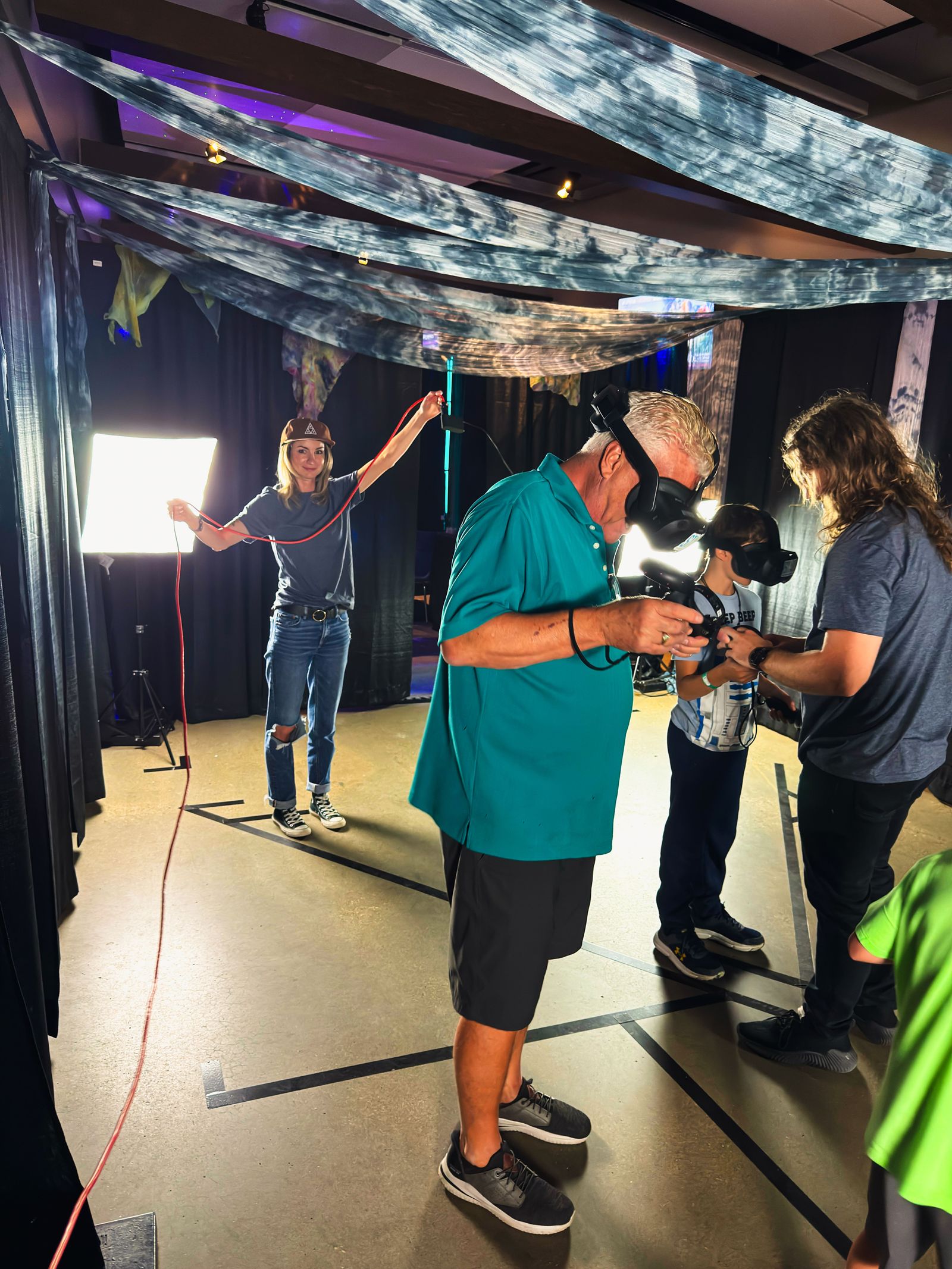
Our team spent 12 weeks building Step Into Webb, plus some light social media marketing in the run-up. On site, we ran an arena of 244 sq. ft., with an 8 headset fleet.
Tours were bookable on-site and online in 30-minute slots running through the centre’s 9 AM–5 PM operating hours: a short orientation followed by 15 minutes inside the experience.
Two constraints matter for reading the numbers below. First, we capped the arena at 16 guests per hour (well under what the platform supports) so we could watch guest flow and staff interaction closely at a manageable scale. Second, we left a 15-minute buffer between sessions to absorb prototype quirks and unknown technical variables. The current version of the Adventure Portal platform removes those constraints and supports continuous operation.
In other words: every figure that follows is a floor.
What we measured
Five metrics, tracked through the booking system and through post-experience surveys taken on an on-site iPad and by follow-up email:
Total bookings: overall demand.
Utilisation: the percentage of bookable slots actually used.
Ratings: guest satisfaction on a 5-star scale.
Net Promoter Score:word-of-mouth potential.
Email signups: appetite for a repeat visit.
Demand: 603 guests, 73.5% utilisation
We took 615 bookings across 254 groups. Around 12 people didn’t show, leaving 603 guests through the experience over eight days.
Against 820 bookable slots, that is 75.0% booked and 73.5% attended. Availability varied day to day as we adjusted the booking platform for setup time and staff training, so these represent slots genuinely bookable by guests.
Much of the remaining gap was not soft demand at all; it was empty one- and two-player slots in sessions where we had to turn larger groups away.
Strong demand, with very limited marketing, on a prototype setup. Under optimised conditions there is clear headroom above this.
Guests explored interactive 3D reconstructions of five of the telescope’s most famous images, built from NASA data.
Satisfaction: 4.84 out of 5
Guests rated their enjoyment from 1 to 5 stars through two independent channels. The on-site questionnaire returned 108 responses averaging 4.88/5. The follow-up email survey returned 15 responses averaging 4.80/5. Combined, that is 4.84/5.
The near-identical result across two separate collection methods is the useful part; it suggests the feedback is consistent and reliable rather than an artefact of who happened to answer. We estimate roughly 40% of groups submitted a response (123 responses across 254 booked groups, rounded down to allow for groups submitting more than once).
Advocacy: an NPS of 84.3
The on-site survey also asked how likely guests were to recommend the experience, on a 1–10 scale. Of the responses: 3 detractors, 11 neutral, and 94 promoters.
That produces a Net Promoter Score of 84.3. A score above 0 is good, above 20 favourable, above 50 excellent, and above 80 is generally described as world class. This pilot sits in the top tier of visitor attractions.
Retention: 61% opted in
Respondents could leave an email address to be notified the next time TELUS World of Science runs a similar VR exhibit. 71 of 108 did, a 61% opt-in rate.
For an in-person survey taken at the end of a museum visit, 61% is exceptionally strong, and it is the clearest signal in the dataset that guests wanted this to come back.
What guests said
This was an excellent addition to Telus. Your staff was very kind and knowledgeable. I took 3 grandsons who unanimously voted it the best time. Thank you. (Hennie Schenk)
Loved this experience so much! The kids and adults as well in our group were amazed at the visuals and learned a lot in such a short time. We hope this can be brought to a much larger setting and used for all sorts of learning experiences! (Cody Tremblett)
Loved it! What a fun idea. Hopefully it’s something that sticks around. A fully immersive VR that follows the feature event would be amazing. (Broc Bertrand)
This was great! Leaders were very good with the kids. I think you could offer this for much younger kids as well. Thanks! (Morgan Kindrat)
Really cool VR experience. Much more than I was expecting. Thanks. (Corey Anderson)
Operational simplicity is the point: one staff member can run the theatre for every 32 guests per hour.
What this means for a full-size theatre
The pilot did what we needed it to do: it showed that free-roam VR is not a novelty but a sustainable, high-throughput, high-draw exhibit format, and it showed it at roughly half the capacity the platform is built for.
A full-size Free-Roam VR Theatre is a semi-permanent installation sized between 255 and 2,500 sq. ft., running 8 to 32 concurrent guests and 32 to 128 guests per hour, on 15-minute experiences, operated by one staff member per 32 hourly guests. Content rotates to match a centre’s programming calendar, which is where the repeat-visit value comes from.
Our next step is to scale this model into those full-size theatres, with three goals:
Expand capacity: up to 64 guests per hour, enough to make VR viable as a headline exhibit.
Expand content: a rotating library of exhibit-aligned experiences.
Expand impact: a centrepiece attraction that pulls in local schools and families on its own.
What IMAX and dome theatres did for scale and spectacle, we think free-roam VR can do for interactivity: a centrepiece attraction that combines reach, sustainability, and genuine educational wonder. Given where the hardware now is, the question is no longer whether VR becomes central to science centres, but how quickly they adopt it.
We’re rolling this model out with select North American centres over the coming months. If you’re planning exhibit space and want to talk through what a Free-Roam VR Theatre would look like in your building, we’d like to hear from you.